
 Image 1 of 5
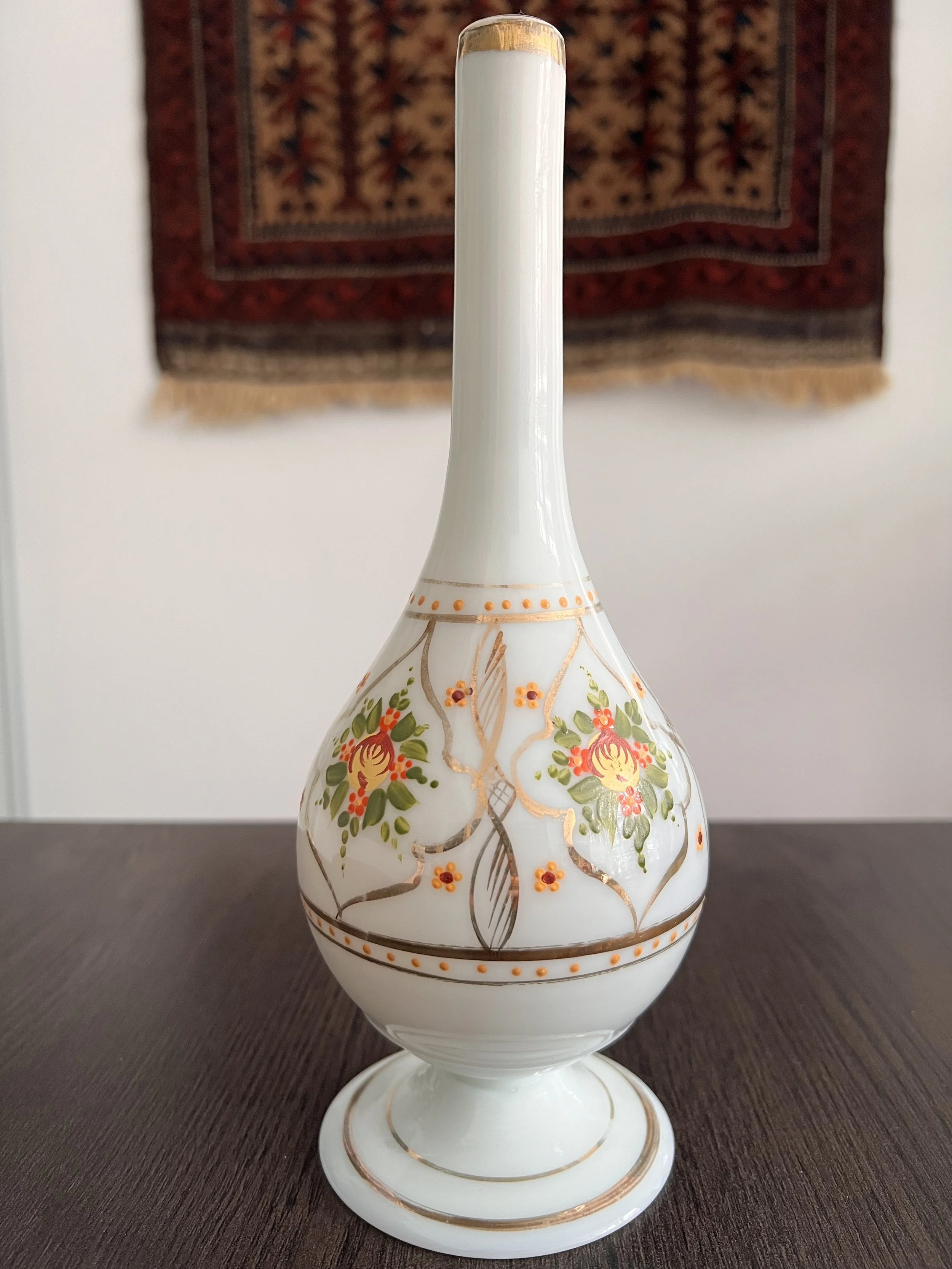 Image 2 of 5
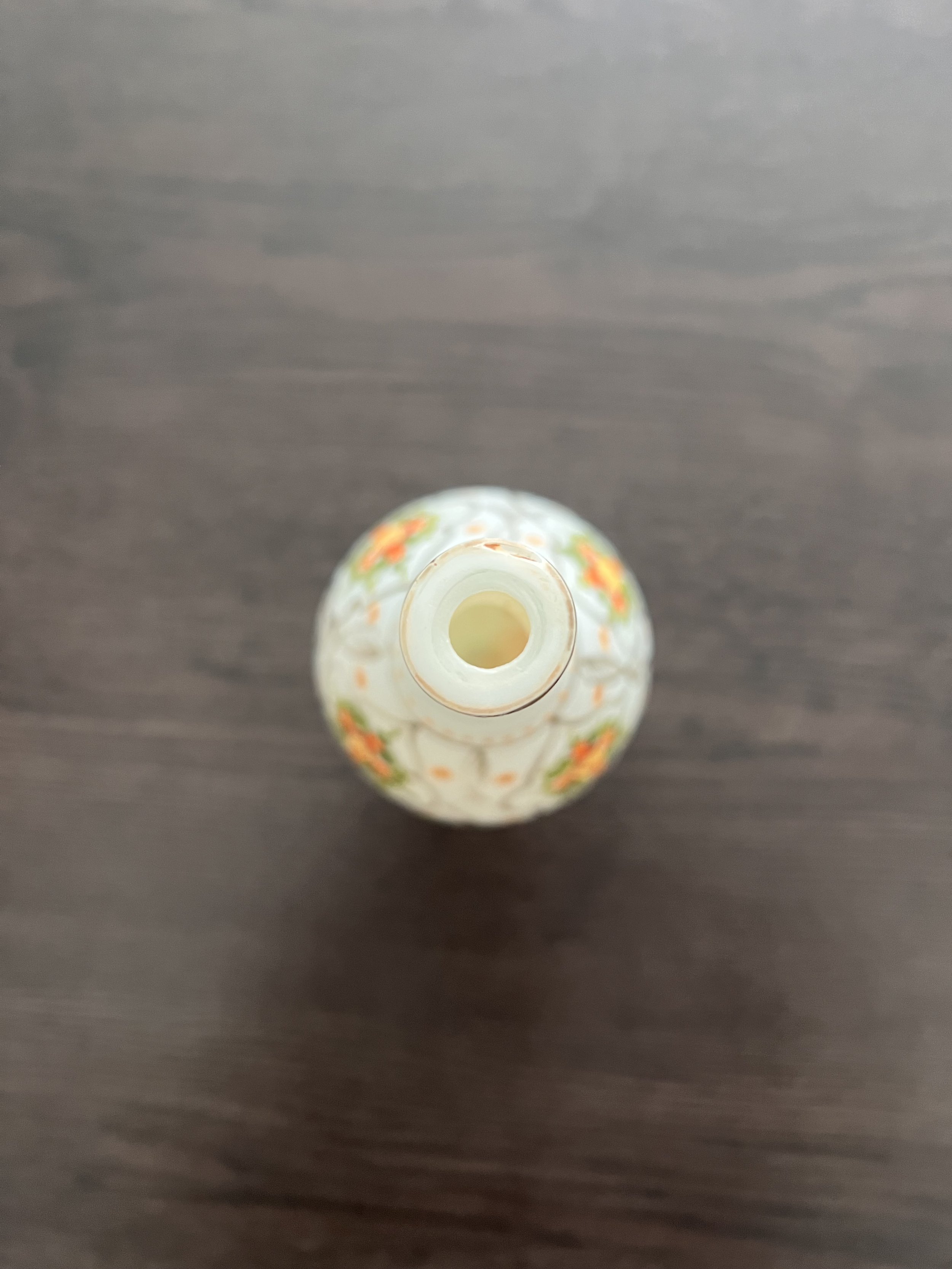 Image 3 of 5
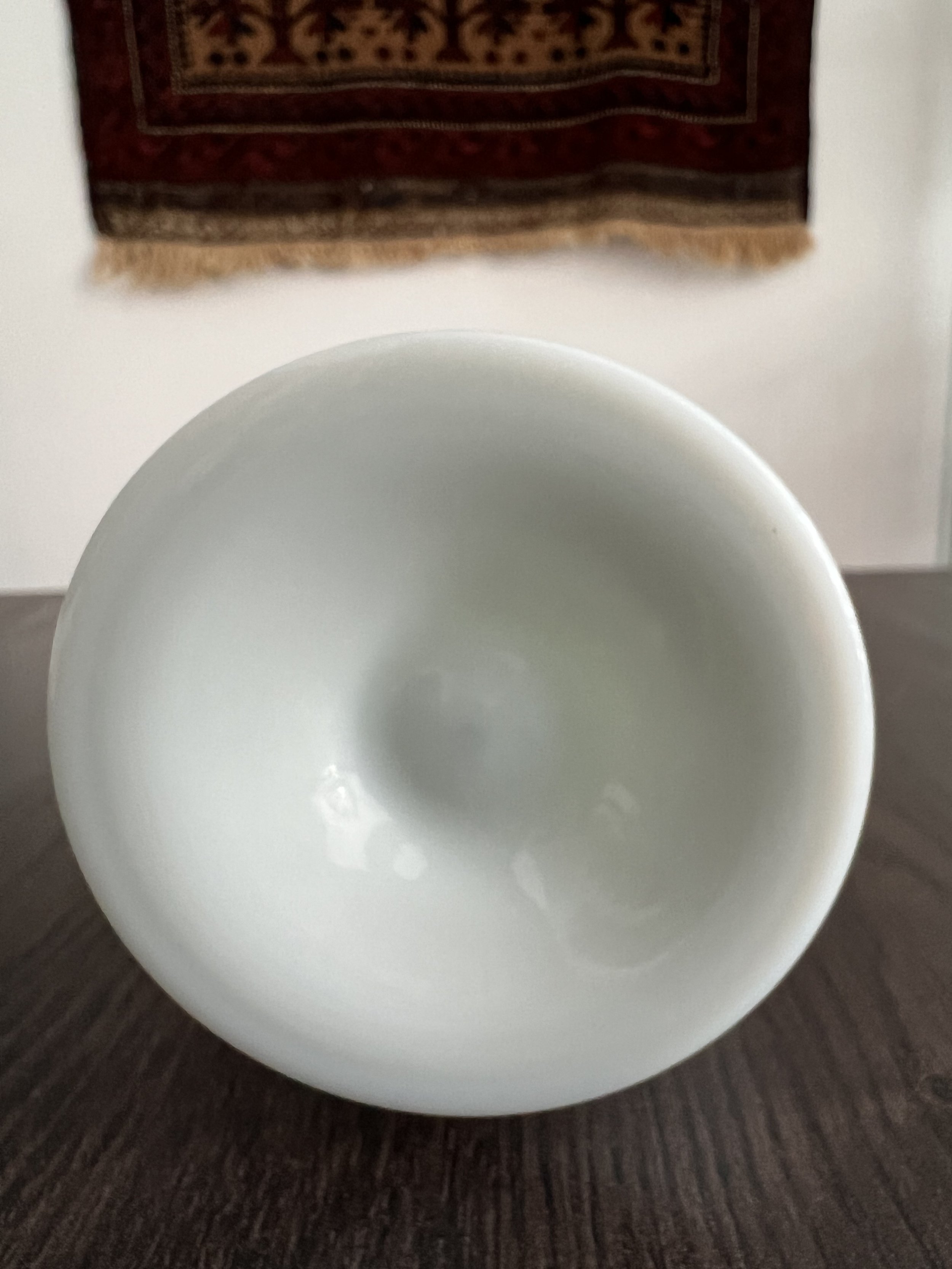 Image 4 of 5
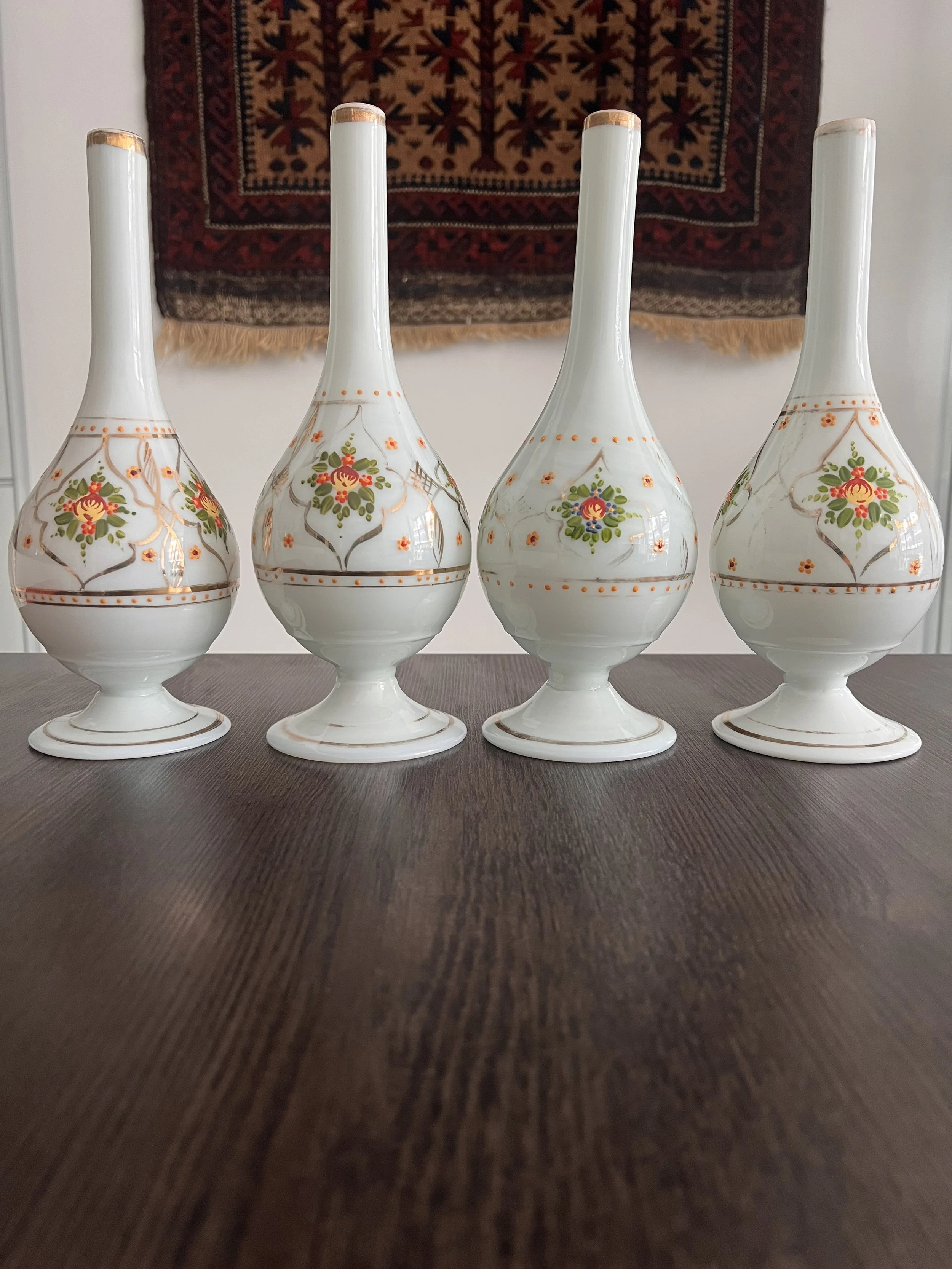 Image 5 of 5
Origin: Probably France of Bohemia (Produced for the Eastern Export Market)
Date: Late 19th century
Dimensions: 25 × 9 approx
Price: 4600 AED
Description:
Step back into an era of unmatched opulence with this exquisite 19th century opaline glass rosewater sprinkler.
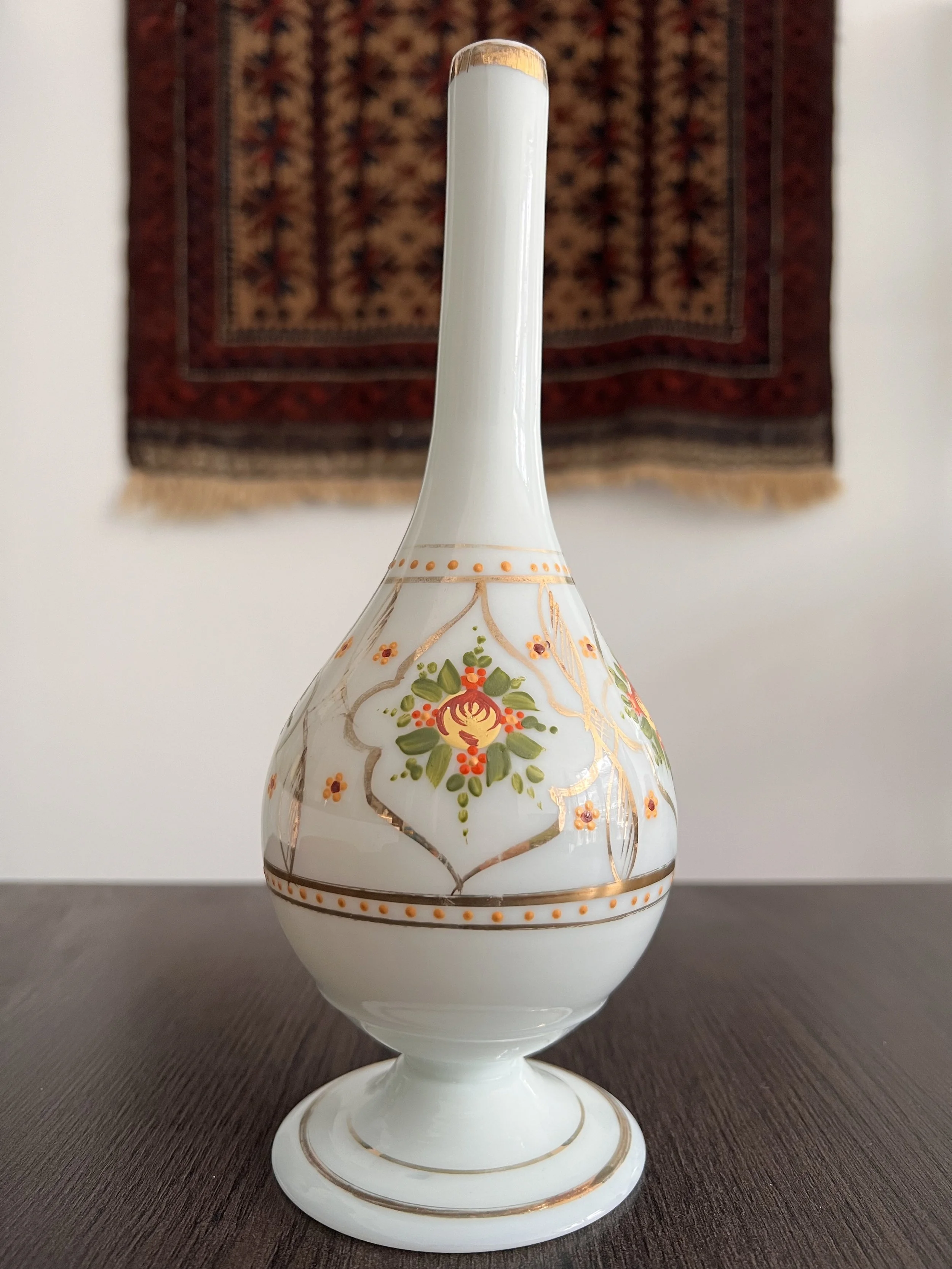
Known historically as a gulab pash, this piece represents the ultimate intersection of western artistry and eastern tradition. Crafted from translucent milky white opaline glass, it features a bulbous base that tapers into an elegant, elongated neck.
The bulbous body is ornately adorned with hand painted floral medallions, red and orange blossoms nestled in green foliage, framed by a delicate swirling gold gilt linework.
During the 1800’s legendary European glassmakers such as those in France and Bohemia, created these masterworks exclusively for export to high courts of the Ottoman Empire, Persia, and Mughal India. Intended to mist fragrant rosewater onto the hands of esteemed guests, it was a profound symbol of hospitality, purity, and elite social standing.
For collectors, finding a fragile glass piece of this age with its slender neck perfectly preserved is a true rarity.
Origin: Probably France of Bohemia (Produced for the Eastern Export Market)
Date: Late 19th century
Dimensions: 25 × 9 approx
Price: 4600 AED
Description:
Step back into an era of unmatched opulence with this exquisite 19th century opaline glass rosewater sprinkler.
Known historically as a gulab pash, this piece represents the ultimate intersection of western artistry and eastern tradition. Crafted from translucent milky white opaline glass, it features a bulbous base that tapers into an elegant, elongated neck.
The bulbous body is ornately adorned with hand painted floral medallions, red and orange blossoms nestled in green foliage, framed by a delicate swirling gold gilt linework.
During the 1800’s legendary European glassmakers such as those in France and Bohemia, created these masterworks exclusively for export to high courts of the Ottoman Empire, Persia, and Mughal India. Intended to mist fragrant rosewater onto the hands of esteemed guests, it was a profound symbol of hospitality, purity, and elite social standing.
For collectors, finding a fragile glass piece of this age with its slender neck perfectly preserved is a true rarity.